The room was dismal, not like an American nursery. Paint peeling from the walls was small in perspective; the smells and sounds of this place loomed large. Perhaps like someone who first steps into a full barn on a busy day, smells assaulting their delicate senses, only this was worse, it held children. I felt like I had stepped into a world of pain that most there had adapted to; what else could they do?
Back in 1990, there was news coverage about the awful state of affairs of institutionalized children in Romania. Communism had fallen in December of 1989 with the assassination of communist dictator Nikolai Ceausescu and his wife, Elena. It became known that Romania had an abundance of children because of Ceausescu’s Decree 770, established in 1966, and many families were struggling to feed themselves. With government orders to produce many children yet no corresponding free enterprise system giving families the ability to have their own business and work in a competitive environment, Ceausescu’s plan was destined for failure. As a result, the difficult and heartbreaking decision parents were forced to make was to place one or more of their children in a government orphanage so the rest could have enough to eat. Soon after the revolution (December 1989), benevolent organizations, individuals and Christian Ministries came forward and began working to provide safe and healthy environments for these children. Many foundations and private orphanages opened to help bring relief to the over 100,000 – 200,000 babies and children discovered in the government orphanages and institutions throughout the country.
The film crew from ABC’s 20/20 show did a multi-part series exposing
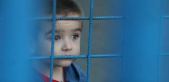
the awful conditions in several Romanian institutions for children. One of the places they filmed upon visiting was an institution in Siret. Many people were horrified and stirred with compassion to do something to help these children. A filmmaker from California, John Upton, was one of the people who took action and made a significant and positive difference in the lives of many of the children; he was able to find them adoptive families in the U.S. The adoption of Romanian children soared following Upton’s expose’.
Our Visit to Siret
As we approached the children’s institution in Siret, we had been told before entering the grounds that this was one of the places that the 20/20 news crew had visited and filmed. We figured that since communism fell in 1989, things would be much different by now, 10 years later. We parked outside the iron gates; as they opened we looked at a disheartening setting. Among other things, the dank and run down cement buildings had paint peeling, which was not uncommon to see in
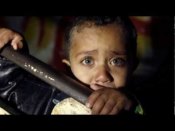
Romania, but here where children were housed made it feel ominous and cruel. We saw a few young teens, moving about through the main roadway corridor inside the property. They were sullen, quiet.
Our interpreter apparently knew the person who allowed us in and guided us through the institution. We were not sure what was being said, we only knew the sights and smells we encountered that day will forever stay in our minds and hearts. How could someone explain these conditions? They were beyond what we imagined.
We were led to a larger building on the right that housed the older children, whose ages appeared to be from 8 to 18. These were the “unadoptable” — the children no one would have interest in. They were supposed to be “handicapped” in some way, either mentally or physically. Many were normal children with just a simple abnormality; crossed-eyes, a turned in foot, dullness from hunger, and any number of things that could have been easily fixed elsewhere, here, became their marker for the institution. Any normal
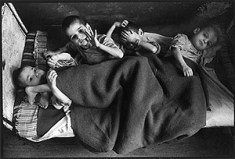
child placed there would soon become unstable in some way and then be given the diagnosis of “handicapped”. The walls were cold, dirty, damp concrete. Even the smell was dirty. The ceilings in this building were high, which eased the concentration of the smell a bit. The children housed there carried on as instructed, and as though we were not present; it was a very depressing sight. As we left that building to enter another, a girl who looked to be about 14 with one arm missing and matted hair, likely lice infested, came running over to us. She wanted a hug, and even though my natural-self wanted to recoil, I reached out and gave her a hug. She smiled and felt like she had a friend, even though I could not speak her language, and so she tagged along with us.
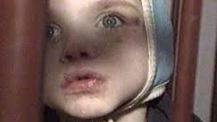
The next building we went inside had several sections. In one area there were infants bundled up and lying in beds. It was dark and dirty; the smell was terrible. It reminded me of what it must be like to be in a sanitarium of disease. It felt like I was breathing in disease of every sort — tuberculosis, pneumonia, death. The dark heaviness of soul we felt while walking through this area was sobering. Dale and I would glance at each other with tears in our eyes; we wanted to move on. The next room, with the same awful air quality, contained children who appeared to be ages 2 through 8. They were tied into small chairs and were rocking in them. Some were banging their heads; others rocking, rocking, hitting again whatever was near. I was at a loss as to what to do, or think. I didn’t understand how this could exist. The worker saw our dismay and shock and then ushered us back out into the cold, crisp, fresh air; I breathed in deeply. I remember feeling like my lungs were filled with death and disease, and how good it felt to be outside breathing fresh air… and able to walk away.
If you have ever been to Romania you will recall that the village homes are built in the old-style; constructed of blocks made with manure and straw with a skim coat of plaster parging on the outside to keep the elements from dissolving the blocks. Because of this method, the homes have a distinct smell when they are heated with wood in the winter. The blocks of straw and manure create a smell that is common and people just get used to it. I came to know this smell quite well when I lived there the following year. The smell in this institution could have partially been caused by that, but I believe it was much more. Because they needed to keep the children warm, there was little ventilation and thus the poor air quality was overpowering; yet that was the least of their problems.
This was very difficult for us to understand; how could these conditions exist? We were weeping, feeling overwhelmed and needed to leave. As we drove back to drop off the person who had accompanied us there, we sat silently, feeling anguish over these circumstances. Little was said. Our guide could see our distress and offered some explanation about the post-communism era and financial struggles. I remember wondering how the caregivers could even work there and asked that of our guide? He said some of these women do it to serve the children. They have very little they can do other than care for them day-by-day.
My Return
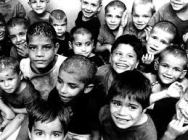
Eighteen months after my first trip to the Siret Institution with my husband, Dale, I returned alone this time. It was the summer of 2000, on this occasion our four adoptive children accompanied me. I was involved with the Nathanial Church at that time and found that one Sunday per month this church visited the Siret institution, as did other churches, to provide a children’s service along with a meal for them and other needed items. I was anxious to go and see what had changed since my previous visit. Upon arriving there I found that it was still quite depressing and overwhelming, but I was comforted by the fact that this time I was going to be there as part of the solution. It was good to be able to help, in some small way — to bring light and joy to these poor children. The Pastor of the church, Johnny Miller, guided and instructed those of us new to this outreach on how to respond and what we were permitted to do. We only went into the large building housing the older children who had attended the church service. Judging from what I saw, I imagined that not much had changed in the other buildings either.
I had been living in Romania for about six months by then and had emotionally adapted somewhat to the desperate conditions there. It truly was impossible to help everyone. The churches were doing their best to help those in need, not only with food and necessities but teaching the basics of living without dependence upon the government – under which the people had been forced during communism. When a person comes to Christ, there also comes hope. Upon becoming part of God’s Family, the Church encourages people to move forward. It was always beautiful to see this change. The desire to work, and depend on God, removes the hopelessness and despair that drives so many to alcohol. So many broken families were a result of desperation among the people; many fathers left the country to find work in other parts of Europe. Some sent money back, others did for a while, and others were never seen again. Mothers with hungry children are abundant in Romania. Many of these women found the church to be their answer. Their children were loved and cared for, education and provision became a reality. Hope became something they could actually find. I was thankful that because of faithful and generous people, something was being done for those who put their trust in God.
This was good for me. I was able to obtain a small glimpse of what our Heavenly Father sees because of the results of sin. My heart became intertwined with His.
(Photo credit: Pixabay)
______________________________________________________________________

There are numerous reports on the internet about the conditions I’m referring to. This contains text (by Izadore Ruckel) along with video of 20/20 undercover footage
Ceausescu’s Forgotten Children
Growing up in a Romanian Orphanage
______________________________________________________________________
My Missionary Friends in Romania who are involved in the solution: Outstretched Hands (Brad & Nora Hayes) and Gateway to Hope (Reinhard & Darcey Neufeld).

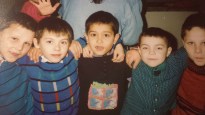 At about 10:30 a.m. we woke up to curious children outside our door wanting to know who had arrived from America. Upon waking and realizing where I was, the memories of the van ride, only a few hours previous, haunted me. But I quickly got off my bed to get dressed and see who the little voices were on the other side of the door. Dale was already dressed, actually, I think he slept in his clothes – he would do that quite often. Not me, I needed the softness of pajamas to really relax and sleep. The blankets on the beds were the old olive-green, itchy, army-type and even with a sheet folded over the top they were still not comfortable. Wow, did I have a lot of adjusting to do!
 In the year 2000, I ended up living in Romania unexpectedly. We were in the midst of adopting our four children when it became apparent I would need to stay and live there in order to keep the process moving. What we thought would be 30-60 days ended up being 11 months. This allowed me to serve as the missions field-director of Living Waters Mission and I very much took to this task. I look forward to returning to Romania to visit and minister to women there as God provides opportunities for me to do so.

 “Sin will take you farther than you ever want to go…”
 Nancy Demary